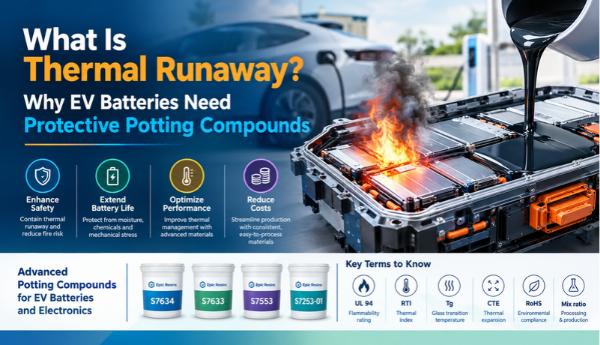
What Is Thermal Runaway? Why EV Batteries Need Protective Potting Compounds
Posted 27 Oct 2026 15:38 | 38 views
Thermal runaway is a self-accelerating heat event in lithium-ion batteries. Learn what causes it, how potting helps, and why non-cellular elastomers are considered a safer alternative to foam potting.
What Is Thermal Runaway? Why EV Batteries Need Protective Potting Compounds
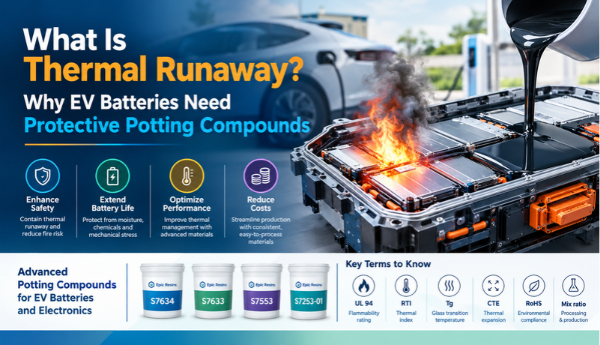
The battery is the most critical component in any e-mobility system, and also one of the most vulnerable. A single malfunctioning cell can trigger a thermal runaway event that ends in fire or even an explosion. For engineers designing battery packs, the question is how to contain a failure when it happens, not only how to prevent it.
What Is Thermal Runaway?
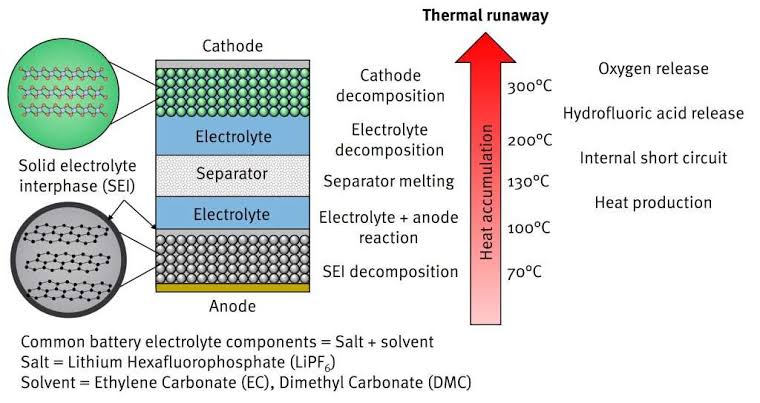
Thermal runaway happens when a cell’s internal temperature rises out of control. The heat triggers chemical reactions that release even more heat, creating a self-reinforcing loop. The biggest risk is propagation: heat from one failing cell can spread to neighboring cells and damage the entire pack.
Common triggers in lithium-ion batteries include:
- Overcharging or operating in high-temperature conditions
- Internal short circuits
- Physical damage from impact or constant vibration
- Moisture or chemical exposure that causes corrosion of terminals and circuitry
Why Do EV Batteries Need Potting?
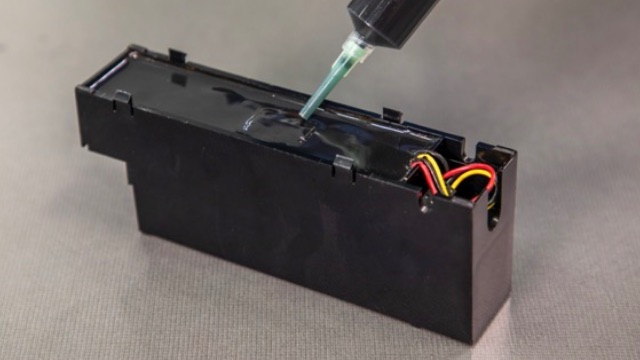
Potting compounds and adhesives are used to protect the pack and its electronics. According to Epic Resins, well-chosen potting materials help manufacturers :
.jpg)
- Enhance safety: mitigate thermal runaway, fire risk, and environmental damage
- Extend battery life: protect against moisture, chemicals, and mechanical stress
- Optimize performance: improve thermal management with UL-recognized, thermally conductive materials
- Reduce costs: streamline production with consistent, easy-to-process materials
Key Terms to Understand Before Choosing a Material
- UL 94: a flammability standard for plastics and polymeric materials. V-0 is a top vertical-burn rating, meaning the material stops burning quickly. The tested thickness matters (for example 6 mm or 9 mm), because the rating depends on it.
- RTI (Relative Thermal Index): the maximum temperature at which a material is expected to keep its properties over the long term.
- Tg (glass transition temperature): the point where a material shifts from rigid to flexible. A low Tg helps a material stay flexible in cold conditions.
- CTE (coefficient of thermal expansion): how much a material expands with heat. A lower CTE puts less stress on components as temperatures change.
- RoHS: a directive restricting hazardous substances in electrical and electronic products.
- Mix ratio: the proportion of the two components in a 2-part system, which affects how easy and repeatable it is on a production line.
Foam Potting vs. Non-Cellular Elastomers
Epic Resins states that foams can expand unpredictably and leave voids, which can compromise a pack’s structural integrity and thermal performance. A non-cellular elastomer instead cures into a dense, rugged, uniform barrier. According to the manufacturer, this barrier contains thermal events and reduces propagation.
| Factor | Non-cellular elastomer (per Epic Resins) |
|---|---|
| Thermal runaway | Helps contain and isolate flames, reducing propagation risk |
| Vibration and impact | Protects cells from mechanical stress and chafing |
| Moisture and chemicals | Resists corrosion in harsh environments |
| Manufacturing consistency | Predictable, consistent material, which supports high-volume production |
| Heat dissipation | Strong thermal conductivity properties help dissipate heat |
Example Potting Compounds for EV Batteries and Electronics
All four products below are 2-component polyurethanes with UL 94 V-0 ratings, each aimed at different applications
 |
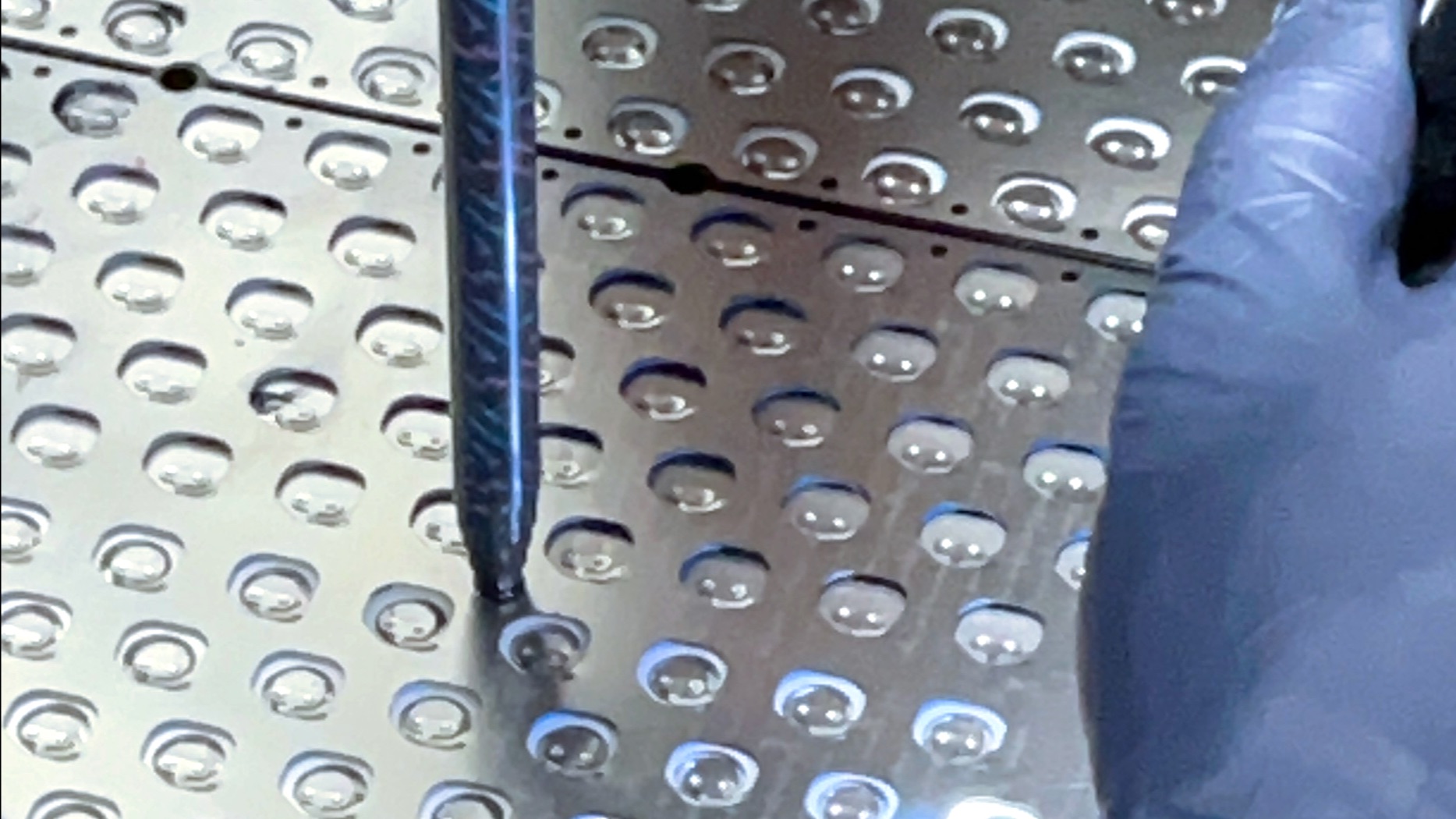 |
| S7634: High-Performance Potting | S7633: UL 94 V-0 Potting Compound |
|
Uses: BMSs, DC/DC converters, GPS sensors
|
Uses: battery packs, other electrical applications
|
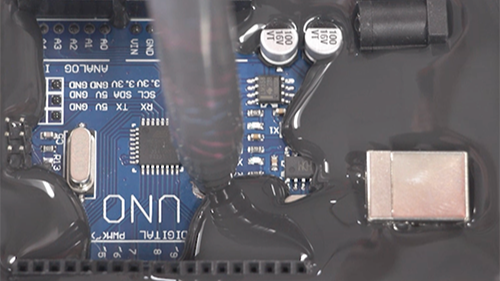 |
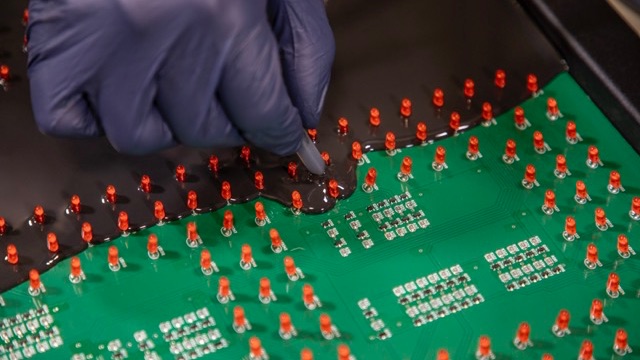 |
| S7553: Low Tg Potting Compound | S7253-01: Tough Potting Compound |
|
Uses: BMSs, sensors, control modules
|
Uses: sensitive electronics in harsh conditions
|
How to Choose the Right Potting Compound
- Define the scope: is the target the whole battery pack, or a BMS board or sensor module?
- Check the flammability rating: confirm UL 94 level and the thickness it was tested at.
- Match the temperature range: compare the operating range and RTI against real conditions.
- Consider Tg and CTE: these matter most where the part faces thermal cycling.
- Review processing needs: viscosity and mix ratio should suit your dispensing equipment and cycle time.
- Confirm environmental compliance: check RoHS status and whether halogen-free material is required.
Sources: Epic Resins, EV Batteries page (epicresins.com/E-Mobility/EV-Batteries); Epic Resins product brief on non-cellular elastomers for e-mobility; product pages for S7634, S7633, S7553, and S7253-01.